
-2.png)
.png)
THE MUGHAL EMPIRE (1526–1857) – COMPLETE INTERACTIVE GUIDE

This comprehensive guide covers every important fact, event, ruler, reform, battle, architecture, administration, policy, foreign embassy, invasion, decline factor, and legacy of the Mughal Empire.
The Mughal Empire was one of the most powerful and influential empires in Indian history, known for its rich cultural heritage, architectural marvels, and administrative innovations. This guide provides exhaustive details suitable for exams, research, videos, blogs, and study material.
I. ORIGIN OF THE MUGHALS
- Descendants of Timur (paternal) and Genghis Khan (maternal).
- Timurid-Persian culture deeply influenced early Mughal art, architecture, language & administration.
- Primary languages: Turki, later Persian (court language).
:max_bytes(150000):strip_icc()/babur-5c830bad46e0fb0001cbf4e5.jpg)
II. GEOGRAPHICAL EXTENT AT PEAK (Aurangzeb's Reign)
- North: Kashmir, Kabul, Swat
- South: Jinji, Karnataka
- West: Hindukush, Multan, Kandahar
- East: Bengal, Chittagong, Assam
→ Largest empire in medieval India after Ashoka.
III. FULL LIST OF ALL MUGHAL EMPERORS (WITH DETAILS)
1. BABUR (1526–1530) – Founder
Key Events:
- 1526 – First Battle of Panipat (defeated Ibrahim Lodi)
- 1527 – Battle of Khanwa (defeated Rana Sanga)
- 1528 – Battle of Chanderi (defeated Medini Rai)
- 1529 – Battle of Ghagra (defeated Afghans under Mahmud Lodi)
Contributions:
- Introduced Gunpowder, matchlocks, artillery
- Wrote Tuzuk-i-Baburi (autobiography)
- Built Ram Bagh (Agra) – first Mughal garden
- Loved nature, described flora-fauna in detail
2. HUMAYUN (1530–1540 & 1555–1556)
Key Events:
- 1539 – Battle of Chausa (lost to Sher Shah Suri)
- 1540 – Battle of Kannauj/Bilgram (defeated; empire lost)
- Exiled to Persia — received military aid from Shah Tahmasp I
- 1555 – Regained Delhi with help of Bairam Khan
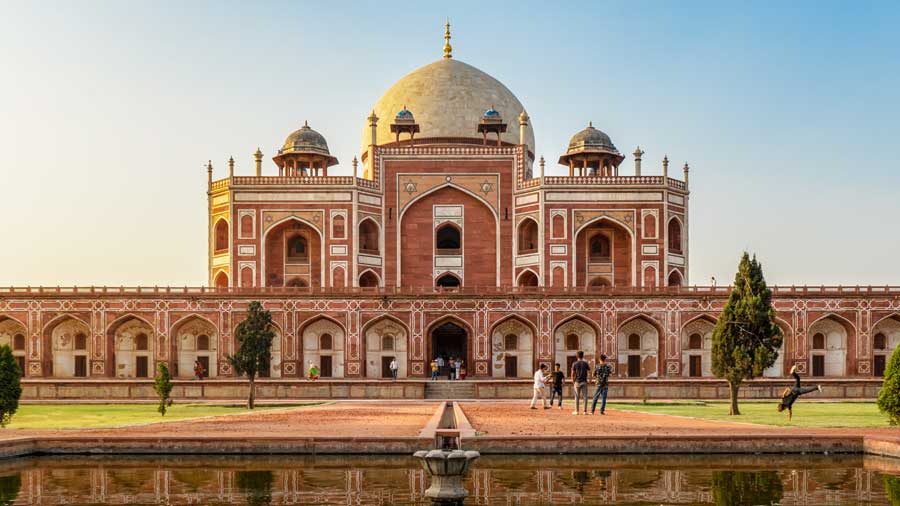
Contributions:
- Founded Din-Panah (library/observatory)
- Died by falling from Sher Mandal library stairs
- Biography: Humayun-Nama by Gulbadan Begum
3. AKBAR (1556–1605) – Greatest Mughal Emperor
Key Events:
- Second Battle of Panipat (1556) – defeated Hemu
- Conquests: Malwa, Gujarat (1572), Bengal (1576)
- Mewar (Battle of Haldighati 1576 vs Rana Pratap)
- Kashmir, Sindh, Orissa
- Central India: Ranthambore, Kalinjar
- 1598 – Annexed Deccan (Ahmednagar)
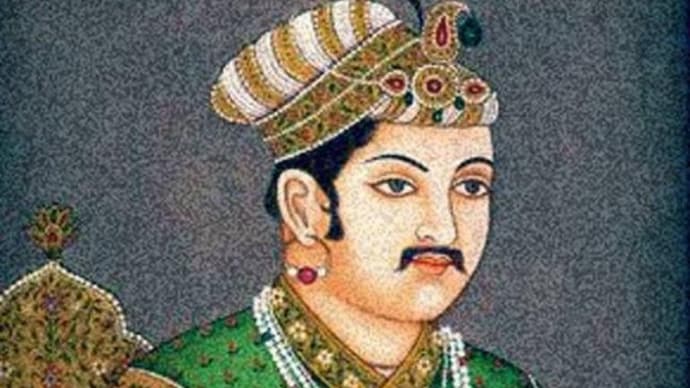
Administration:
- Mansabdari System (Rank-based military/civil service)
- Zabti/Dahsala System (Todar Mal's revenue reforms)
- Centralised administration, 4 major departments

4. JAHANGIR (1605–1627) – Patron of Arts
Key Events:
- 1608 – Captain Hawkins visits court
- 1615 – Sir Thomas Roe receives trade permission for British
- Lost Kandahar to Persia (1622)
- Nur Jahan wielded significant power during his reign

5. SHAH JAHAN (1627–1658) – Golden Age of Architecture
Key Events:
- Built Taj Mahal (1632-1653) in memory of Mumtaz Mahal
- Constructed Red Fort and Jama Masjid in Delhi
- Created Shahjahanabad (Old Delhi)
- Peacock Throne created during his reign

6. AURANGZEB (1658–1707) – Empire at Maximum Extent
Key Events:
- Reintroduced Jizya tax on non-Muslims (1679)
- Executed Guru Tegh Bahadur (1675)
- Long Deccan Campaigns (Bijapur, Golconda annexed)
- Empire reached its maximum geographical extent

IV. DECLINE OF THE MUGHAL EMPIRE (1707–1857)
The decline began after Aurangzeb's death in 1707 and accelerated through the 18th century due to multiple factors:
| Emperor | Reign | Key Events |
|---|---|---|
| Bahadur Shah I | 1707–1712 | Tried to reconcile with Rajputs, Marathas. Beginning of court factionalism. |
| Jahandar Shah | 1712–1713 | Puppet of Zulfiqar Khan. Introduced revenue farming (Ijara). |
| Farrukhsiyar | 1713–1719 | Controlled by Syed Brothers. Granted trade concessions to British. |
| Muhammad Shah Rangeela | 1719–1748 | 1739 – Nadir Shah invades Delhi, takes Peacock Throne & Koh-i-Noor. |
| Shah Alam II | 1760–1806 | Lost Battle of Buxar (1764). Gave Diwani Rights to British. |
| Bahadur Shah Zafar | 1837–1857 | Last Emperor. Leader of 1857 Revolt. Exiled to Burma. |

V. IMPORTANT BATTLES OF THE MUGHAL EMPIRE
Foundational Battles (Babur):
- First Battle of Panipat – 1526
- Battle of Khanwa – 1527
- Battle of Chanderi – 1528
- Battle of Ghagra – 1529

Decline Period Battles:
- 1739 – Nadir Shah invades India
- 1761 – Third Battle of Panipat
- 1764 – Battle of Buxar (decisive British victory)
VI. MUGHAL ADMINISTRATION – FULL STRUCTURE
Central Government:
- Emperor (Padshah)
- Wazir/Diwan-i-Ala – Finance
- Mir Bakshi – Military
- Sadr-us-Sadur – Religion/charities
- Qazi-ul-Qazat – Chief Justice
- Diwan-i-Insha – Communications
Provincial Government:
- Province = Suba
- Head = Subedar/Governor
- Other officers: Diwan, Bakshi, Qazi, Kotwal, Qanungo
VII. ART, ARCHITECTURE & CULTURE
Architectural Evolution:
- Babur → Early Timurid style
- Humayun → Persian influence
- Akbar → Fusion style
- Jahangir → Painting peak
- Shah Jahan → Architectural zenith
- Aurangzeb → Simpler architecture

VIII. FOREIGN TRAVELLERS TO MUGHAL COURT
- Portuguese: Barbosa
- English: Hawkins, William Finch, Sir Thomas Roe
- French: Bernier, Tavernier
- Italian: Niccolao Manucci
- Dutch: Van Linschoten

IX. CAUSES OF MUGHAL DECLINE (FULL LIST)
- Weak successors
- Inefficient later administration
- Costly Deccan wars
- Rise of regional states (Hyderabad, Awadh, Bengal)
- Maratha expansion
- Sikh & Jat uprisings
- Invasion of Nadir Shah (1739)
- Abdali's invasions
- British East India Company expansion
- Loss of revenue (Bengal)
- Corruption & factionalism
- Decline of trade routes

X. LEGACY OF THE MUGHAL EMPIRE
- Introduced centralised administration
- Built India's finest architecture
- Shaped language: Persian → Urdu → Hindustani
- Fusion of cultures (Indo-Persian)
- Promoted trade with Europe
- Influenced Indian cuisine, clothing, gardens, music, dance

MUGHAL EMPIRE TIMELINE CHART
| Period | Emperor | Major Events |
|---|---|---|
| 1526–1530 | Babur | First Battle of Panipat, Establishes Mughal Empire |
| 1556–1605 | Akbar | Second Battle of Panipat, Mansabdari System, Din-i-Ilahi |
| 1605–1627 | Jahangir | Thomas Roe visits, Peak of Mughal painting |
| 1627–1658 | Shah Jahan | Taj Mahal built, Golden Age of Architecture |
| 1658–1707 | Aurangzeb | Empire at maximum extent, Reimposes Jizya |
| 1739 | Muhammad Shah | Nadir Shah invasion, Peacock Throne taken |
| 1857 | Bahadur Shah II | Revolt of 1857, End of Mughal Empire |


No comments:
Post a Comment